
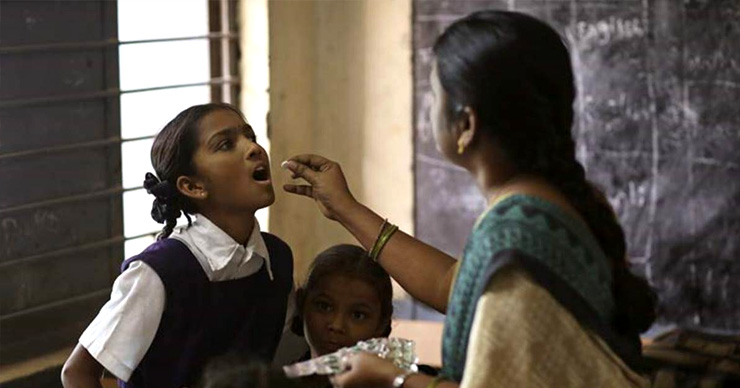
Programmes to address malnutrition will have to find ways of addressing poor food choices amongst children of 10-19 years.
India is home to almost a fifth of the global adolescent (10-19 years) population. This period of transition of a child into adulthood, accompanied by significant physical, physiological, psychological, and behavioural changes, is the second and the last “window of opportunity” in life for gaining optimum height, and for catch up growth — the first being the first 1,000 days of life. Nutritional requirements increase substantially and peak during this period with a 15–25 per cent increase in height, attainment of 40–60 per cent of peak bone mass and up to 50 per cent of adult body weight — as well as blood loss due to the onset of menstruation among girls.
The first Comprehensive National Nutrition Survey (CNNS) in 2019 of the adolescent population by the Union Ministry of Health and Family Welfare and UNICEF, reveals that every second Indian adolescent suffers from some form of malnutrition. Almost a third of adolescent girls and a quarter of adolescent boys are short for their age. About a quarter of adolescents (24.1 per cent) are thin for their age while 4.8 per cent are overweight. The anaemia prevalence rate among girls (40 per cent) is double compared to boys (18 per cent). Anaemia is a serious public health problem amongst adolescent girls 15-19 years in 19 states. Read More…